Key Takeaways
- Act within 60 seconds: open windows and exit immediately when a car hits water.
- Follow SWOC — Seatbelts off, Windows open, Out immediately, Children first — to survive.
- Avoid “wait and float” pressure-equalization tactics; experts call this a dangerous last resort.
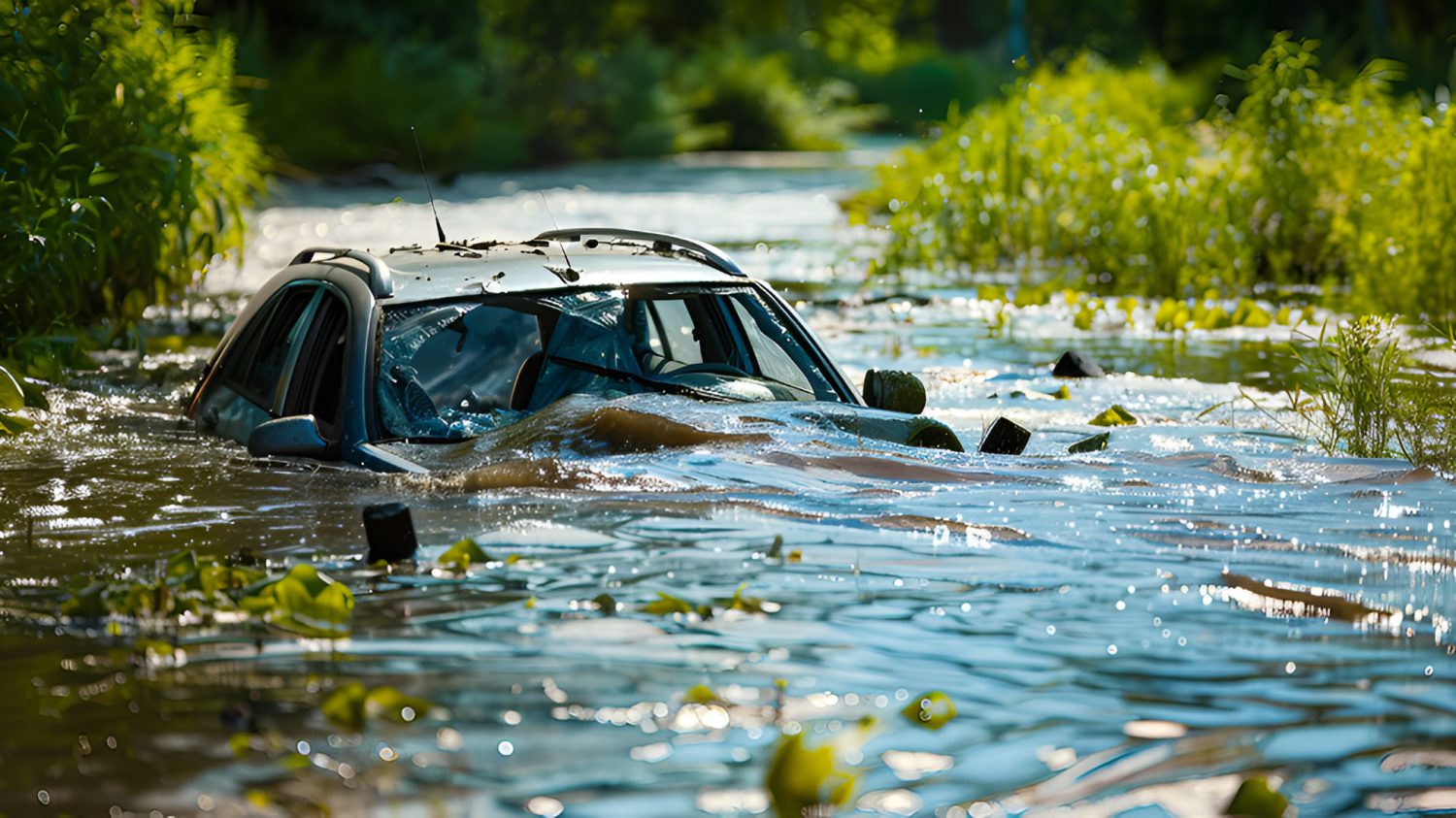
Your car hits the water. Maybe it’s a flooded road, a guardrail that gave way, a bridge. The car starts sinking. Your instinct — shaped by years of TV dramas and viral Reddit threads — tells you to wait. Let the cabin fill. Equalize the pressure. Then open the door and swim out.
That instinct will kill you.
Safety researcher Gordon Giesbrecht has spent years studying vehicle submersions, and his protocol — SWOC — is blunt: Seatbelts off, Windows open, Out immediately, Children first. “The very first thing you need to do is to disengage your seat belt, open your windows, and then get out as soon as you can,” he told NPR in 2024. KidsAndCars.org, AAA, and Operation ALIVE all echo the same framework. You have roughly 60 seconds before escape becomes nearly impossible. The door is not your exit. The window is.
Here’s the sequence, in order:
- Unbuckle your seatbelt the moment the car hits water — then direct passengers to do the same
- Hit the power window immediately; most electric windows function for up to about a minute after submersion
- If water pressure or electrical failure blocks it, break a side window with a dedicated escape tool — aim near a corner
- Skip the windshield entirely; it’s laminated glass, engineered not to shatter like tempered side windows
- Move children through the window oldest to youngest — older kids can float briefly while younger ones are helped
What About the “Wait and Float” Advice?
Knowing the sequence is only half the equation — understanding what not to do matters just as much.
Circulating social media guidance — including a widely-shared Reddit post — suggests waiting for the cabin to fully flood, equalizing pressure, then opening the door. That approach is real. It’s also a last resort, not a plan. That approach is roughly as reliable as GPS directions into a lake: technically a route, catastrophically wrong. Modern research shifted expert consensus precisely because hesitation kills. Pressure equalization only applies if windows cannot be opened or broken at all — it is not where you start.
Store a compact escape tool — glass breaker plus seatbelt cutter — on your visor, keychain, or center console. Not the glove compartment. Memorize SWOC or AAA’s SURE (Stay calm, Unbuckle, Roll or break window, Exit) before you need it, because stress destroys recall under pressure.
As automakers increasingly use laminated side glass and more complex electrical systems, these protocols may need updating — and manufacturers should be building emergency egress into the design itself. Until then, the window is your exit. Use it.
Original Article LINK
