

Seventeen years ago I wrote a magazine story about parents who accidentally leave their children to die in hot cars. The story became famous, and I became naively convinced that the attendant publicity would change people’s awareness, and then their behavior. That the story would save lives.
That never happened. The horrifying deaths keep occurring year after year in state after state in roughly the same heartbreaking numbers. But I clung to another, lesser hope: That gradually the public would become aware of the neuroscience behind this tragedy — a mental hiccup to which anyone is potentially vulnerable, especially when under stress — and stop demonizing the parents to whom this happens. And that this understanding would percolate to law enforcement officials who would stop dealing with these cases as crimes, but as what they are, tragic accidents: documentable, measurable neurological failures of memory that can befall, and have befallen, good parents from all walks of life. They are mistakes that will punish the parent far more profoundly than any punishment a court can or should mete out.
That also hasn’t happened.
And right now, in Gwinnett County, Georgia, it’s not happening again, with a particularly appalling ferocity.
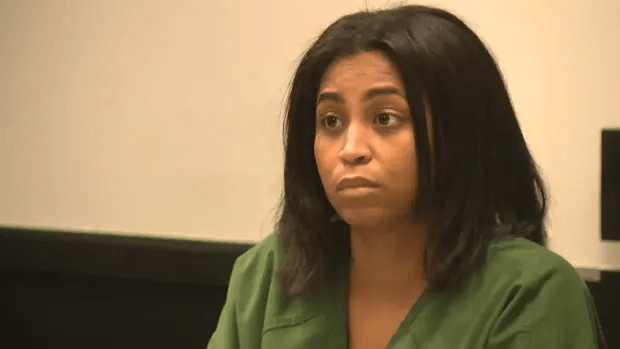
The woman at the top of the page is Deja Coleman, a 29-year-old nursing assistant at a hospital. Pictured beside her is her one-year-old son, Daniel. He died a week and a half ago in her car in the hospital parking lot. Severely sleep-deprived and under overwhelming emotional stress, Ms. Coleman had driven her three boys to daycare, but forgotten to drop off Daniel, who was asleep in his car seat. She just drove on to work.
Deja has the same look on her face that I saw in the dozens of other mug shots I looked through in researching my original story. It is exactly as I described it then: "the haunted, hunted, naked-eyed look these parents always have, up against the wall.” Whether the parent is male or female, White or Black, affluent or poor, educated or barely literate, perennially absentminded or fanatically organized, the look is the same. Overwhelmed, zombified, drowning in shame. Because at that moment in their lives, they are all the same person. Or non-person.
I found out about this case only two days ago. I am going to include only the details I have confirmed. I think it may be all you need to know.
On the afternoon of July 29, passersby noticed an unresponsive baby inside a car in the employee parking lot of Gwinnett Northside Hospital, in Lawrenceville, Ga. They called police, who smashed in a window, but Daniel Coleman was beyond help. Police located the mother, who was still at her job 200 feet away, and told her. She screamed that she thought she had dropped Daniel off. She was, a police spokeswoman said, “devastated.”
It turns out Deja Coleman had been under more than a normal amount of stress, and the lack of sleep was the least of it. The home Coleman was living in was an apartment in Rainbow Village, which exists, in part, as a shelter for abused women. She’d been living there for more than a year. For reasons of safety, her husband had not been informed of where she was, or where the children went to school. The doors were kept locked and visitors were screened.
Coleman was brought in for questioning. In about half of these car-death cases nationwide, authorities decide not to prosecute. In a little more than half of the rest, they charge a relatively minor crime, such as involuntary manslaughter or child endangerment. In the remaining cases, they … escalate.
The Gwinnett County prosecutor charged Deja with second degree murder, a crime that in Georgia carries a mandatory minimum 10-year prison sentence. No bond was set; she remains in custody.
Then they handed the children over to their father.
—
First, the science. Forgotten Baby Syndrome — a term that was coined by researchers in response to my initial article — is not an official medical diagnosis, but it describes a phenomenon that has become well recognized among researchers who study the intersection of emotion, stress, and memory. The first two can overwhelm the third, particularly when a fourth factor kicks in: Sleep deprivation.
Deja Coleman awoke around 5 a.m. on the morning of July 29 at the shelter, after having slept almost not at all because baby Daniel was teething and fussing. At the daycare center, she walked in with her two older sons but not Daniel. That was her custom. The oldest child, six-year-old Dinero, was autistic and nonverbal and needed special attention. One of the teachers later reported that the usually ebullient Deja looked drained of energy, with a flat affect. She had brought in Daniel’s diaper bag and said she’d be back with the child momentarily. But she never returned. The teachers were busy, and bustling. Nobody was counting heads. No questions were asked.
The police and prosecutors concede that that is exactly what happened. No one contends there was anything intentional. Everyone admits this was a mistake, and only a mistake. But, still. Murder Two.
I talked to Tom Ford, a lawyer from Atlanta. He is representing Coleman, pro bono. He has experience in similar cases. This is what he says:
“The state of Georgia has chosen a path devoid of common sense and basic human decency.”
—
For years, Deja Coleman did not report her husband’s abuse to authorities. The family was already in financial distress — she didn’t want him arrested. But she could leave.
She told a friend, Pamela Adrien — a director of the daycare center — that she had decided to flee her home with the kids one day, after something happened she knew she could not live with — not so much for her sake as for the children’s.
“She said she was fighting him off in front of children,” Adrien told me. “They were right there, in the vicinity. And the children just kept doing what they were doing. They thought this was normal behavior. And that’s when Deja decided she had to leave.”
“Also…”
She hesitated. She was trying to be polite.
“There were times when they would have intercourse when she didn’t want to.”
—
Tom Ford told me the police confiscated Deja’s cell phone, and that on it is evidence that she was physically abused. The police, presumably, have seen it. They had it before they charged her. They also knew she had recently gotten a temporary restraining order against him. Also, that she has no criminal record.
—
Deja Coleman is in jail, so I could not reach her. I could not reach her husband. But I did get the phone number of her husband’s stepfather, Eddie Thomas, a marketing exec in Florida.
I was not sure what to expect, but I was not prepared for what he said.
“I believe Deja one hundred percent. He was always hitting her. She was fearful of being beat on. It was a legitimate concern she had, and I say that from the accounts given to me from both of them. Why would he say that if he didn’t do it? I am sure there was physical aggression to Deja. She told me she’d had visible bruising. She said that at times she was not able to go to work because of markings on her face.”
I asked him what his stepson was like. He told me this: Daniel Coleman Sr. had named his youngest son after himself. But also — in a way — his oldest son, too. Daniel’s street name was “Cash.” Dinero, in Spanish, means cash.
Also,
“He was once dismissed from a job because he had a physical altercation with a coworker.”
Also,
“He has been arrested before, assault with a weapon, involving a previous girlfriend.”
Also,
“He is currently out on bond with a pending charge: He was pulled over in a vehicle and they found an unregistered weapon.”
And finally:
“Deja is a perfect mother, in my honest opinion. I love Deja. I completely forgive her for what took place, and I stand with her one hundred percent.”
—
When Deja escaped from her house, she was transported to a shelter by an Atlanta pastor she had gotten to know well. His name is Jesse Hardy. She called him and said she’d been brutalized, and Hardy and his wife drove 60 miles to pick her and the kids up.
They’ve remained close. Pastor Hardy told me Deja called him from jail a few days ago:
“She said she’d been in a psych ward for six days, and she said the Lord told her to exercise more patience. She said, ‘I was moving too fast,’ and I think that was it. She was doing too much, and all by herself, and with a child with special needs.”
And,
“She is a marvelous person, bubbly and effervescent. She is a marvelous mother. She would run through a brick wall for those children.”
—
Immediately after police released the two boys to their father, two people tried to persuade him to give them to people more suitable to care for them. One was attorney Ford, who tried gentle cajoling. The other was his stepfather, who was perhaps not so gentle in his cajoling. His stepson acquiesced.
The kids are now in temporary custody of Pamela Adrien, Deja’s good friend, the director at the daycare center. She is keeping them at her home, with her kids, who are the same age; they get along fine. They’re still going to the same daycare, with the same teachers. Their routine remains the same, and almost everything seems normal, Adrien said.
—
I did not talk to the prosecutors. It seemed pointless: No one disagrees on the facts, and — knowing these facts — they still decided Deja Coleman deserves to spend ten years in prison. That’s their statement, I have decided.
I have seen this attitude before, too many times. It is cowardly and self-righteous. Prosecutors are giving the public what they are convinced the public wants and demands, thus taking no chances that they’ll be criticized for leniency. In that cold, compassionless calculus, they are right.
I explored this in my first story 17 years ago. Humans have a fundamental need to create and maintain a narrative for their lives in which the universe is not implacable and heartless, that terrible things do not happen at random, and that catastrophe can be avoided if you are vigilant and responsible.
Back then, an expert told me: “We are vulnerable, but we don’t want to be reminded of that. We want to believe that the world is understandable and controllable and unthreatening, that if we follow the rules, we’ll be okay. So, when this kind of thing happens to other people, we need to put them in a different category from us. We don’t want to resemble them, and the fact that we might is too terrifying to deal with. So, they have to be monsters.”
Georgia is a particularly cruel state in these cases. In 2016, not far away from Gwinnett County, a man named Justin Ross Harris was prosecuted for murder with malice after forgetting his son in his car. He was found guilty and was sentenced to 32 years without the chance of parole. It was crystal clear to most people that this had been an accident, but prosecutors framed it as an act of unconscionable evil, a deliberate attempt to murder his child so he could marry a mistress. Evidence had, indeed, shown Harris had been promiscuously unfaithful to his wife, and a judge permitted that evidence in at trial. The jury was appalled, and convicted Harris even though his own ex-wife — who conceded that she despised him now because he had “destroyed my life” — testified that there was no way he would have murdered his son, because he loved the boy fiercely and unconditionally.
Harris served six years of his sentence before his conviction was overturned. The Georgia Supreme Court found the sex stuff wildly prejudicial. He was set free and will not be retried.
The case is featured in a 2020 movie written and directed by Susan Morgan Cooper. It is titled “Fatal Distraction,” which was the headline from my original story, borrowed with my blessing. It was recently the number one documentary on Amazon.
—
On Tuesday, there will be a probable cause hearing in the case, in Gwinnett County. Probable cause hearings are usually pro-forma events — particularly in this case, with a dead child and an uncontested narrative, and an obvious person to blame. But attorney Ford is hoping to turn this hearing into more than that. He has invited the media. He has a plan. He shared it with me. It is a good plan.
I do not know if he will mention this, but I will do it now. Statistically, prosecutors are significantly more likely to seek criminal penalties in these cases when the defendant is dark-skinned.
—
There is one more thing. A postscript, if you will.
Tom Ford and Pamela Adrien conspired to let Deja communicate with her kids from jail by FaceTime. This is technically not permitted.
“I’ll take it on the chin and ask for forgiveness later,” Ford said.
Ford and Adrien’s recollections of the conversation are almost identical.
Adrien held the phone up to the kids and Ford held his up to Deja, who was behind a Plexiglas partition.
Dakota, the middle son, asked, “Mommy, did your baby die?”
“Yes,” she said.
Silence for a moment.
“It’s okay, mommy. I forgive you.”
Original Article LINK
Deja Vu
As promised, I am bringing you up to date on the case of Deja Coleman, the Lawrenceville, Georgia, mother who — under extreme sleep deprivation and unimaginable stress — accidentally left her one-year-old son to in a hot car when she went to work at a hospital. Coleman had been living with her three children in a shelter for abused women. Casting aside most prosecutorial precedent in cases like this, the government decided to charge her with second-degree murder, a crime carrying a mandatory minimum ten-year sentence. Then authorities turned her two children over to the abusive father. The court declined to set bond; Coleman remains incarcerated.
When I wrote about this on Saturday, I argued that the prosecutors were acting with small-minded, small-town cruelty.
They still are.
Yesterday, a probable cause hearing was held in Lawrenceville. Coleman’s defense team arrived. They included a group of nurses who worked with Coleman and were there to talk about her professional dedication and love for her children. Dr. David Diamond was there, a neuroscientist who specializes in the effects of stress on memory. He wanted to speak to the neurophysiological basis for what happened to Coleman, and argue that this tragedy regularly befalls good parents. Amber Rollins was there; she is the Executive Director of the national non-profit organization Kids and Car Safety, whose mission is to prevent deaths like this, and whose office counsels people to whom it has happened. None of these people were given an opportunity to speak in court. All the talking was done by Tom Ford, a prominent Atlanta attorney who took this case pro bono.
At the time of the hearing, Amber Rollins had already been told no by the government. She had applied to the Gwinnett County sheriff’s department to be allowed to visit with Coleman in jail. Here is how she put it in her letter:
“The purpose of this meeting would be to provide grief support to Ms. Coleman. Our organization works very closely with families who have lost a child in vehicle related tragedies. . . . The grief parents experience after the loss of a child is profound and can be debilitating. Simply knowing that there is a community out there that is here to support her could be of great benefit to Ms. Coleman.”
This is the letter she got back:
“Since COVID, there has been no in-person visitation in the jail except with attorneys. Inmates can initiate phone calls and other communications to people of their choosing. Due to HIPAA, I cannot disclose any information on any inmate’s physical or mental health condition. I can inform you that we have a full team of physical and mental health professionals who serve our inmate population.”
This was her response:
“That is very unfortunate because I have traveled all the way from Kansas to be here to provide grief support for Ms. Coleman. While I appreciate the supports the jail has in place (those are incredibly important), the perspective of having worked with parents who have lost a child in the same way for 20+ years is quite a different kind of support.
“Your website does not reflect the policies you stated in your email. It appears that Gwinnett County does actually allow in person and video visits. I’d like to have a video visit with her today.”
Still, no face-to-face visit was granted. The negotiations over an eventual video conference are ongoing.
Later, Amber Rollins told me: “I just wanted to give her a hug and give her hope that she can get through this.”
—
In court, Tom Ford made an unusual request. He said he would waive his client’s right to the show-cause hearing — essentially, admit that the arrest was not unwarranted — if, in exchange, the prosecution would temporarily reduce the charge against Coleman from second-degree murder to involuntary manslaughter. After a day or two, they could refile the higher charges anytime they wished.
Why would this matter?
Because it would be an act of mercy, Ford said. It would mean that Coleman could be allowed to attend her son’s funeral on Saturday unescorted by armed deputies, and not in handcuffs.
At the hearing, the prosecutor simply declined without explanation, and the issue, and the hearing, were over. The case was sent to Superior Court. Deja Coleman remains in jail.
Today, Ford will file an emergency motion in Superior Court to have Coleman released on a signature bond — her signature only, no bail money — because she is an indigent. That would circumvent the need for guards and restraints.
Ford is not naive. He does not have inflated hopes that any of these pleas will succeed against the institutional rigidity of a bloodless local justice system that seems intent on vengeance. He is building a case in the court of public opinion.
And so he held a press conference after the hearing, at which he made a point no one had mentioned yet. Near him, Amber Rollins gasped.
Deja Coleman’s oldest son, Dinero, is profoundly autistic. He articulates mostly in unintelligible sounds.
In asking the court to grant Coleman’s release on bond, Ford argued that her continued incarceration was an unconscionable added cruelty to a vulnerable innocent:
“The only person on the planet that her nonverbal six year old son can communicate with is her.”
I’ll stay with this story until the end.
Original Article LINK
Cruel But Not Unusual, Vol. III
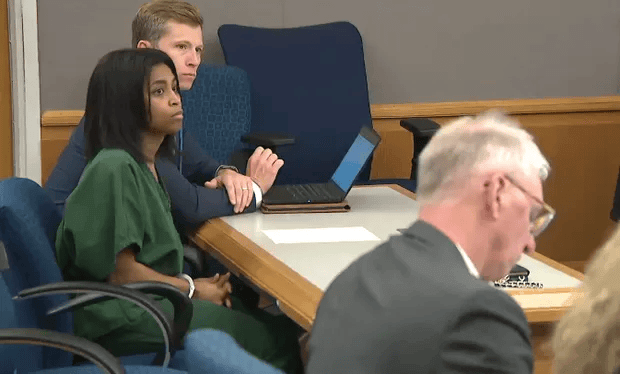
It was the sex stuff that made me want to puke.
I just finished watching today’s bond hearing for Deja Coleman, the 29-year-old Gwinnett County, Georgia, mother of three who accidentally left her 17-month-old son, Daniel, to die in a hot car outside the hospital where she worked as a nurse’s assistant. It happened on July 29. She thought she’d dropped him off at daycare, but hadn’t. He sweltered to death in his car seat.
I am by now all too familiar with these cases of “forgotten baby syndrome,” yet I still cannot fathom the bloodless cruelty with which so many of them are prosecuted. This is the third time I am writing here about Ms. Coleman. It is the bleakest such case I have covered.
At the time the accident occurred, Coleman was living with her three young sons in a shelter for abused women. She learned what she had done from police, while at work, and collapsed in anguish.
By all accounts — including those of the police — what happened to Daniel was an accident occasioned by sleep deprivation and stress. Friends describe Deja Coleman as a cheerful, upbeat person and a devoted mother. Her pastor, Jesse Hardy, said “she would run through a brick wall for those children.”
Nationally, almost half of forgotten-baby cases are judged to be accidents and are not even prosecuted; most of the rest result in charges carrying minimum jail time, or none at all. But Gwinnett County prosecutors charged Deja Coleman with second-degree murder, a crime carrying a mandatory minimum 10-year prison sentence.
Coleman has been living in jail ever since her arrest. Here is what has happened since I last wrote about her case:
Despite her lawyer’s pleas, Coleman was denied bond or any accommodation to allow her to attend her son’s funeral unguarded and in funeral attire. The funeral was publicly announced for 1 p.m., but when friends and family got there, bringing food and drink, hoping to see Coleman and offer their support, they learned they’d been hoodwinked. Deja had already been there, and left.
A court had ordered the visit, but hadn’t specified when. So — apparently trying to avoid publicity — prison deputies delivered her alone, at 6 a.m. She was in handcuffs and a green prison jumpsuit, and shuffled into the mortuary in ankle bracelets to say goodbye to her baby.
—
Today was Coleman’s formal bond hearing. I watched it on streaming video.
Bond is sometimes unopposed by the state, when the defendant seems unlikely to flee or be a danger to others. Not today. Prosecutor Megan Matteucci wanted the prisoner to remain incarcerated indefinitely. She argued that Coleman —who is indigent, has no criminal record and solid roots in the community — might indeed skip town or cause harm. These were preposterous assertions, and Judge Tamela L. Adkins shot them down.
Then Matteucci argued that if Coleman were free she might try to intimidate potential trial witnesses, and that even if she were released on bond, she should not be allowed to see her four-year-old son. The prosecutor noted that Coleman’s six-year-old son is autistic and nonverbal, so he couldn’t be a witness. But the four-year-old could, Matteucci said.
This was even more preposterous. The whole reason Coleman was so desperate for bond was that she wanted to be with her sons and help them cope. Releasing her without the ability to see her child would be unbearably cruel, and pointless. The judge shot that down, too.
Matteucci tried one more thing.
She began: “I hate to be inappropriate and bring this up…”
She then argued that Deja remained a dangerous, distracted mother because she was always on the phone with … men. Five different men, maybe six. Even in calls from her jail cell, Matteucci said, she was having sexual conversations with men, “phone sex, and rough sex, she’s asking for in text messages, and …. “
“I object to that!”
This was Matthew Acuff, one of Coleman’s two defense attorneys. He asked what was the possible relevance of this to a bond hearing.
Indeed, said the judge. How is it relevant?
Matteucci began to shuffle papers and stammer. She started a sentence but didn’t finish it. Finally…
“She, uh, remains destructive in other ways and ….”
“All right, I am gonna sustain the objection,” the judge said dryly.
Coleman’s other attorney, Trinity Hundredmark, rose to speak:
“I’ll just say I understand this is the state’s opportunity, in front of the news, to try to assassinate our client’s character and try to paint her to be a horrible person. I totally get that.”
Yes. So do I. The whole thing was deeply revealing and deeply disgusting and deeply familiar.
Ten years ago, in a Georgia courtroom not far from this one, a father named Justin Ross Harris was convicted of murdering his young son by leaving him in a hot car. Harris was sentenced to life in prison without the possibility of parole, because the prosecutors persuaded the jury that he had done it deliberately. They did this by presenting evidence that Harris had been serially unfaithful to his wife, sexting multiple women on the very day his son died. The prosecution’s theory was that he was trying to get rid of the kid to start a new, carefree, licentious life.
The first part was true — he had been promiscuously unfaithful. The second part was not. Even Harris’s ex-wife, who said she now despised him because he had “destroyed my life,” testified that he loved his son deeply and unconditionally and could never have deliberately harmed him.
Justin Ross Harris was released from custody last year. His conviction was overturned because a court ruled that the sexual evidence had been irrelevant and wildly prejudicial.
Judge Adkins ruled. Deja Coleman was released late this afternoon on $5,000 bond. She is under house arrest, likely until her trial. She will have an ankle monitor. But she can be with her children.
More as this develops. I am not letting this one go.
Original Article LINK