
The case against Rhonda Jewell threatens to upend a foundational principle of the U.S. legal system.
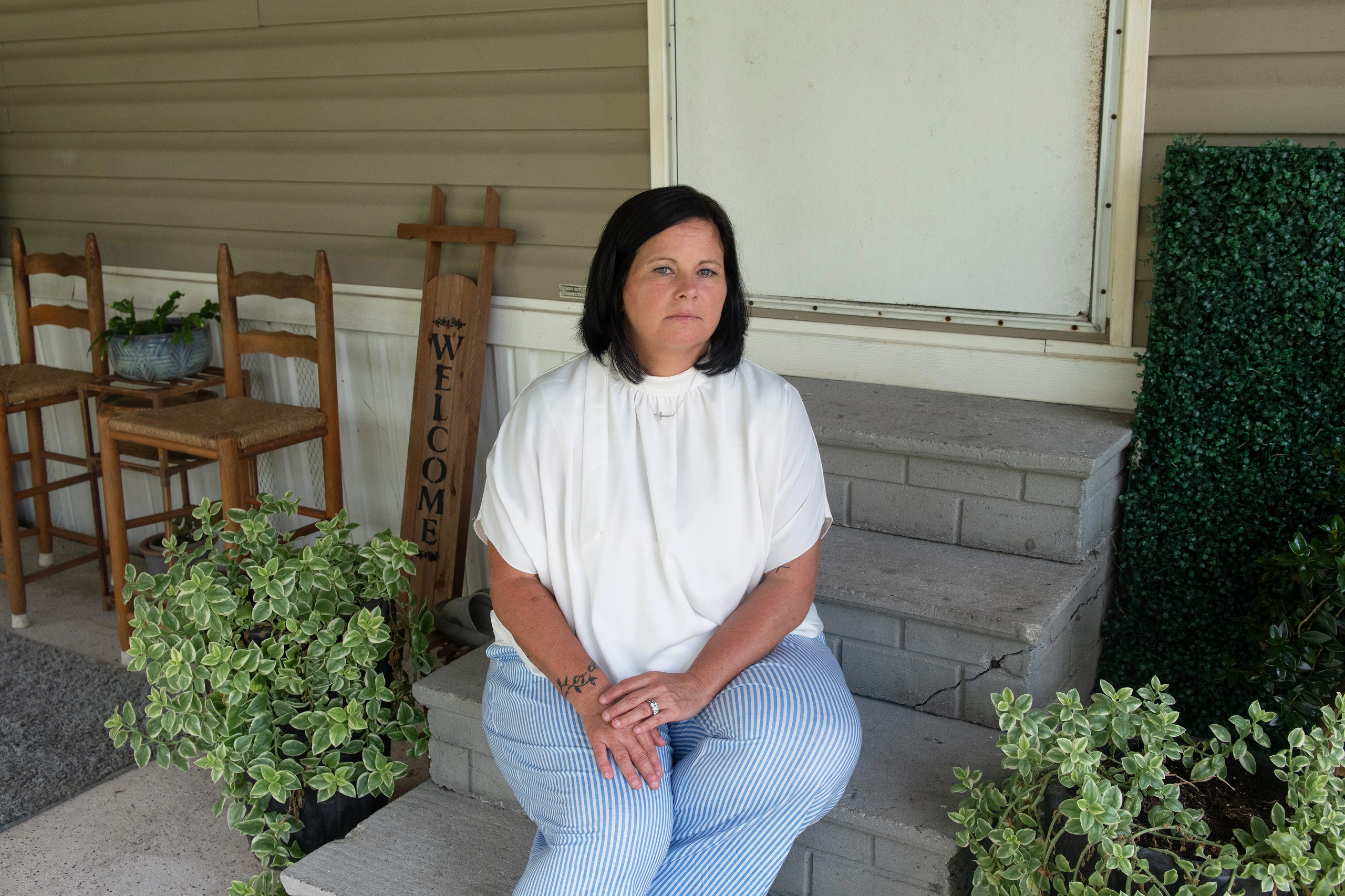
Until a few years ago, if you asked for a nanny recommendation in Baker County, Florida, chances are you would be told to call Rhonda Jewell.
Rhonda started nannying at the age of 17. She took a few years off when her three children were young, but even then, she was always caring for other kids. She was known to show up at her daughter’s baton twirling competitions with a suitcase full of snacks, extra bobby pins, a changing tent, and pillows and blankets for all the girls on the team. Her kids’ friends were constantly streaming in and out of her home, which is exactly how she liked it.
Once, the father of two of the girls she sometimes watched suffered a cardiac arrest. Their mother asked Rhonda to watch the girls for a night or two, but she ended up caring for them for three weeks while their father recovered in the hospital, according to court records.
In 2023, when Stacy Paschal started looking for someone to watch her three kids, she kept hearing the same name: Rhonda Jewell. “If you could pick any babysitter in the entire county, she would be the one,” she was told.
A few months after Rhonda started working for Paschal, another mother named Brooke Paige asked Rhonda to watch her baby, Ariya, a few days a week. Brooke’s mother was Rhonda’s best friend, and the two families were close. They ate meals together several times a week and went on vacations together. Rhonda had attended Ariya’s gender reveal, helped plan her baby shower, and first held her when she was just a few weeks old. To Rhonda, Ariya was family.
With Paschal’s permission, Rhonda began picking up Ariya and bringing her along while she watched Paschal’s kids. Rhonda was initially set to watch all four kids Mondays, Wednesdays and Thursdays, but her schedule was constantly in flux. Brooke’s mother-in-law eventually took over childcare on Thursdays, and once Paschal’s husband lost his job, there were days they’d tell Rhonda not to come.
On Wednesday, July 19, 2023, Rhonda’s schedule had been particularly scrambled. She hadn’t watched the Paschal kids the previous Wednesday or Monday. That morning, Paschal had asked Rhonda to arrive about a half hour earlier than usual.
Rhonda also had a lot on her mind. She had a doctor’s appointment the next day, and then was leaving for a family trip to Orlando. A few weeks later, she was planning to go to England to watch her youngest child compete in the baton twirling world championships. It would be Rhonda’s first time out of the country and one of her last milestone celebrations with her daughter before she headed off to college in the fall.
Rhonda got to Brooke’s around 8 a.m., and Brooke loaded 10-month-old Ariya into her rear-facing car seat in the back seat of Rhonda’s SUV. Brooke placed the diaper bag on the floor in the back and chatted with Rhonda for a few minutes. Rhonda thought about stopping at the Burger King to pick up breakfast for the Paschal kids, but decided she didn’t have time. When she got to the Paschals’ house, she grabbed her phone, water bottle and lunch, and hurried inside.
Paschal’s twins woke up within a couple of minutes of Rhonda’s arrival. They wanted back rubs, and then breakfast, and then her help with a magnetic toy puzzle. At lunchtime, each child wanted something different. It was all very “rambunctious,” Rhonda would later testify. Around 1 p.m., with a hot dog in the microwave and fries on the stove, in the middle of making juice, Rhonda got a phone call from Brooke.
“Hey, I’m here,” Brooke said.
“Here?” Rhonda asked, confused.
“I’m at the door,” Brooke said.
It wasn’t until Rhonda opened the door and saw the money in Brooke’s hand that she remembered.
“I realized I didn’t get the baby out of the car,” Rhonda testified. At the trial, more than a year later, she still struggled to get the words out through heaving sobs. “I forgot. I forgot the — I forgot — I forgot the — I forgot the baby in the car.
Rhonda shoved past Brooke and ran to the car, where Ariya was still in the back seat. After five hours in the Florida summer heat, the car had reached an internal temperature of more than 130 degrees.
Ariya’s lips were blue and her skin was hot to the touch. Rhonda removed her from the car seat, held her close, and prayed to God — begged God — to take her instead.
Brooke pleaded with the 911 dispatcher to hurry. “Please, please come help. Please, please come help,” she said, according to an audio recording of the call. “I don’t know what to do. Please.”
She called her mother-in-law, a nurse, who talked her through how to perform CPR on her baby until the paramedics arrived. At the hospital, the doctor confirmed her worst fear: Ariya was dead.
More than 650 children in the U.S. have died after being accidentally left in hot cars since 1990. Hundreds more have died after climbing into the vehicle on their own or after their parent or caregiver knowingly left them in the car.
Often, hot car deaths are treated as tragic accidents, and no criminal charges are filed. After all, some prosecutors figure, what punishment could be worse than a lifetime of guilt?
When prosecutors do pursue charges, they usually allege child neglect or manslaughter, which typically requires a finding of negligence rather than an intent to kill. People are more likely to be charged if they were using drugs or alcohol at the time, and caregivers are more likely to be charged than parents, said Amber Rollins, the executive director of Kids and Car Safety, a group that works to prevent kids from dying in and around vehicles. But overall, it is remarkably arbitrary whether someone faces years behind bars or no criminal charge at all, said Rollins, who can point to dozens of nearly identical cases with vastly different punitive responses.
Rhonda was initially charged with aggravated manslaughter. In order to convict her, a jury would have to find that Ariya’s death was the result of culpable negligence — or that she made a conscious decision to do something that showed a reckless disregard for Ariya’s life or safety. More than a year later, days before the trial was scheduled to begin, prosecutors tacked on unusually aggressive charges: leaving a child unattended in a motor vehicle and third-degree felony murder.
This charging scheme hinged on the felony murder doctrine, in which anyone involved in a felony that leads to a death can be held criminally responsible for that death. The justification for felony murder goes: Even if an individual didn’t mean to kill anyone, if they made the decision to commit a felony that results in a death — a botched robbery, for example — they bear the responsibility for the totality of the harm. This legal principle is responsible for absurd outcomes, like women being held responsible for murders committed by their abusive partners and the friends of a 19-year-old boy who was killed by the police being charged with his death.
Charging an accidental hot car death as felony murder was a particularly aggressive use of the felony murder doctrine, since Rhonda didn’t intend to commit the underlying felony of leaving Ariya in the car.
“This really takes tragic accidents and elevates them to murder offenses,” Boston University School of Law instructor Caitlin Glass, who co-authored an amicus brief in support of Rhonda, said in an interview.
At trial, Rhonda’s legal team twice asked the judge to grant a judgment of acquittal, citing a lack of evidence that she knowingly left Ariya in the car. They also asked the judge to instruct jurors that they could only convict her of the felony underpinning the murder charge if they found that she knowingly left the baby in the car. The judge denied each request, making the trial outcome all but certain.
In November 2024, jurors reached a seemingly contradictory decision: Rhonda was innocent of aggravated manslaughter and five lesser-included offenses, but guilty of third-degree felony murder. Jurors didn’t have much of a choice on the felony murder charge. It was undisputed that Rhonda had committed the act of leaving Ariya in the car — and that this action resulted in her death. Rhonda was sentenced to 17 years in prison, three years shy of the maximum punishment.

Rhonda, 49, appealed her conviction and her sentence, arguing that the underlying felony of leaving a child in a car requires the defendant to have knowingly done so — and that if the law doesn’t require such knowledge, it cannot be the basis for a felony murder charge.
After spending about two months in prison, Rhonda was released on bond last year to await a decision in her appeal, under the conditions that she wear an ankle monitor (at a monthly cost to her of nearly $400), abide by a curfew and remain within Baker County.
A lifelong extrovert, Rhonda now rarely leaves her home. When she does, she faces harassment from people in her small town who believe she should be in prison. Because she’s restricted to one county, she cannot attend her church, run errands in a neighboring town where she is less recognizable, or even take the fastest route into town, which crosses the Florida-Georgia border. She has put off medical appointments because her doctors are in Jacksonville. Earlier this year, a representative from the company that provides Rhonda’s ankle monitor asked if the device was broken; it showed that she hadn’t left the house in three weeks. That was accurate, her husband confirmed.
Rhonda replays the day of Ariya’s death over and over in her head each day. She struggles to sleep because the accident haunts her nightmares, too. For a long time, she didn’t want to go on living, she said in an interview at her home last month.
“I thought to myself, ‘How could I? I’ve hurt this innocent baby, and now that they’re painting me to be this monster, I don’t know if I can do this,’” she said.
Through therapy, medication and support from her friends and family, Rhonda has found ways to cope, but she still spends most of her time reliving the horror of July 19, 2023.
“I feel guilty if I laugh or smile. I just have so much guilt from that day,” she said. “I don’t know how it happened. I just go over and replay it in my head and say, ‘What if’ or ‘Why not,’ ‘Why didn’t I just — why? Why?’”
The decision in Rhonda’s appeal could come down any day. The outcome will be precedent-setting on one of the most fundamental elements of the U.S. legal system: the idea that people cannot be held criminally responsible for something they did not know they did.
“The presumption in our legal system is that every crime has a mental element,” said Christine Monta of the MacArthur Justice Center, one of the attorneys representing Rhonda on appeal. “This was a tragic accident where there was not just no intent — but no knowledge that the accident was occurring — being elevated to murder.”
In 1995, as Janette Fennell, her husband, and their 9-month-old son pulled into their garage in San Francisco, two armed men forced the couple into the trunk of their car and drove the vehicle away. Trapped in the dark trunk, unable to see whether her baby was still in the back seat, Fennell began to panic. Eventually, the car stopped. The men took the couple’s money and ATM cards and left them in the trunk. Fennell tugged on wires she felt in the trunk and eventually saw a little piece of metal. Her husband pulled the cable, and the trunk popped open. A police officer found her baby, unhurt, in his car seat in front of their home.
The harrowing experience gave way to Fennell’s life’s work. She started Kids and Car Safety and she was effective. Within seven years of the carjacking, she would succeed in getting glow-in-the-dark emergency trunk releases mandated in all new cars in the U.S.
Another source of danger in cars has proven harder to fix. By the late 1990s, airbags had become standard in new vehicles, prompting parents and caregivers to place young children in the back seat. An unexpected tragedy began to emerge: Without their kids in view, when a perfect storm of factors aligned, parents’ memories failed, and they would forget their kids were in the car. Often, a cue would trigger their memory moments later, or the temperature would be mild enough that even a longer memory lapse could be laughed off as a case of “mommy brain.” But each year since 1998, an average of 21 kids have died after being accidentally left in hot cars, according to Kids and Car Safety.
“We saw an almost overnight drastic rise in the number of accidental hot car deaths when children started riding in the back seat,” Rollins said. “If that doesn’t explain why this happens, I don’t know what does. Parents didn’t just become more irresponsible and negligent overnight. No, something changed. What changed is the children are not in our view.”
The stories of these cases are depressingly similar, said Rollins, who closely tracks each death. The responsible parent or caregiver is usually dealing with some combination of stress, fatigue, distraction or change in routine. The baby is almost always asleep and out of view in a rear-facing car seat in the back seat of the car. When the responsible individual discovers their mistake, they are horrified, devastated and just as confused as everyone else as to how it could have happened.
About two decades ago, University of South Florida neuroscience professor and memory expert David Diamond got a call from a journalist asking him to explain how parents could forget their kids in cars.
At that point, he had “never heard of such a thing,” Diamond recalled in an interview. “I know a lot about memory and I can’t imagine how a parent could forget a child in a car.”
As a scientist and a parent, Diamond wanted to know more. He got in touch with the staff at Kids and Car Safety and began interviewing people who had accidentally left their kids in cars. “I saw the pattern emerge,” he said. “Each one told me, ‘I normally do this routine, and I forgot that I was supposed to change my routine.’”
“Once I heard that a few times, I connected that to what’s really well-established in neuroscience: that we have parallel brain memory systems — the autopilot memory system and the conscious memory system — and they can function independently,” Diamond said. Prospective memory, the ability to plan for the future and carry out a task, is particularly vulnerable to being suppressed by habit memory, Diamond said.
A few years into his research, another reporter called Diamond with the same question. This time, Diamond had an answer. He told The Washington Post’s Gene Weingarten that the sophisticated part of our brains “can be held hostage” to a competing, more primitive portion of the brain.
The prefrontal cortex and hippocampus are the parts of our brains responsible for thinking, analyzing and planning, while our basal ganglia control our subconscious autopilot actions. Most of the time, this division of labor works well, he told Weingarten, but sometimes — particularly during times of stress — the higher-functioning parts of the brain become “susceptible to bullying from the basal ganglia.”
“The important factors that keep showing up involve a combination of stress, emotion, lack of sleep and change in routine, where the basal ganglia is trying to do what it’s supposed to do, and the conscious mind is too weakened to resist,” Diamond told Weingarten. “What happens is that the memory circuits in a vulnerable hippocampus literally get overwritten, like with a computer program. Unless the memory circuit is rebooted — such as if the child cries, or, you know, if the wife mentions the child in the back — it can entirely disappear.”
Weingarten’s 2009 story asked, “What kind of person forgets a baby?”
The answer, he found, was that it can happen to practically anyone, no matter their class, age, race, gender or level of education. It had happened to a social worker, a police officer and even a rocket scientist, he wrote.
It can even happen to people who are aware of how common it is. Around the time Diamond was talking to Weingarten regularly to help him with his story, he and his wife took their baby granddaughter on an outing in the car for the first time. When they arrived, Diamond got out of the car and began walking to their destination.
“I’ll never forget this moment. My wife said, ‘Are you forgetting something?’ I had no idea what she was talking about. I had completely lost awareness,” Diamond said in an interview. “Had I been alone, I could have been another statistic of someone that leaves a child in the car.”
Rollins had her own close call when her son was 3 months old. She was dropping her older daughter’s friend off at home after a sleepover and was supposed to drop her baby off at daycare on the way home. She had been up all night pumping and feeding the baby. After dropping off her daughter’s friend and maneuvering out of her tricky driveway, Rollins turned right and headed home to start working, as she had done countless times in the past. It wasn’t until her baby awoke and started making noise that she remembered he was in the back seat, Rollins said.
“I started hysterically crying. I knew that it had just happened to me. The person who knows more about this than most people in the world,” said Rollins, who, at that point, had worked at Kids and Car Safety for 12 years.
Whether an incident was treated as a tragic accident or a crime seemed random, Weingarten wrote, and sometimes seemed to come down to whether a prosecutor could conceive of such an act being an accident. One prosecutor who opted to pursue criminal charges told Weingarten he was acting in defense of “children’s safety” and that as a “watchful father,” he did not believe he could forget his child in a car. A different prosecutor who declined to pursue charges in a similar case told Weingarten there was no crime because there was no intent. He added that his own daughter died of leukemia before her third birthday. He knew what it felt like to lose a child, he said.
The commonly held belief that “it couldn’t happen to me” puts kids at risk, Rollins warned. It discourages parents and caregivers from adopting simple preventive precautions like taking off a shoe and placing it in the back seat when traveling with a child so the driver is forced to look in the back seat before leaving the car. Treating hot car deaths as personal failures deserving of criminal punishment rather than a public health problem that warrants a systemic fix reinforces the notion that these accidents only happen to careless people.
Kids and Car Safety spent years lobbying Congress to pass a law requiring new cars to have a sensor that would sound an alarm if it detected the weight of a child in the back seat after the car was turned off. The 2008 Cameron Gulbransen Kids’ Transportation Safety Act originally included such a requirement, but lawmakers pulled it out of concerns about the auto manufacturers’ lobby, Weingarten reported.
Weingarten’s piece went on to win a Pulitzer Prize. The story was personal for Weingarten, who had had his own close call more than 20 years prior. He was supposed to take his daughter to daycare — which his wife usually did — but once in the car, he became focused on a story he was writing, forgot his daughter was in the back seat and headed straight to work. “The only difference between me and these people is that at the last minute, she woke up and said something,” Weingarten said in a recent interview.
He hoped the attention around the piece would save lives — or at the very least, that it would help people understand why these mistakes happen and why they should be treated as accidents rather than crimes.
None of that happened.
Congress still hasn’t required automakers to install sensors that can detect the presence of a child, and although after-market sensors are readily available, they aren’t widely used because few people think they need to be reminded to take their baby out of the car. In 2019, the major auto industry groups voluntarily agreed to equip most new vehicles with end-of-trip reminders for drivers to check their back seat. But because the reminder goes off automatically at the end of every trip, rather than when it detects a child’s presence, most drivers quickly learn to tune out the warning.
The Alliance for Automotive Innovation, the main lobbying group for major carmakers, said in a statement that “technology to help remind drivers and caregivers about people seated in the rear seat” is now “ubiquitous across the vehicle fleet.”
Every time a child dies after being left in a hot car, Rollins adds their name and the circumstances of their death to a detailed spreadsheet. She or a colleague always try to reach out to the responsible party to offer support and resources and to connect them with other grieving parents and caretakers. Fifteen of the children on her spreadsheet died after being left in cars equipped with the automatic warnings she has told lawmakers for years are insufficient.
So far this year, fifteen children have died after being unintentionally left in hot cars. Seven of those deaths have resulted in felony charges — including a felony murder charge earlier this month. The mother charged with felony murder had been caring for her three children in a shelter for women fleeing abuse when she forgot her one-year-old son was in the car.
“I can’t keep watching people’s lives absolutely ripped to pieces by the criminal justice system, when I think the law is being misapplied,” Rollins said.
Rhonda’s friends call her “Just-In-Case,” an affectionate nod to her propensity to overprepare. When I visited her in July for an interview, she told me to make myself at home, gesturing toward a spread of charcuterie, cheese, crackers, cookies, sliced fruit, coffee and multiple creamer options laid out on the countertop alongside her immaculately set dining room table.
“She’s always been like this,” her husband, Robert Jewell, said. “If we go on vacation, we gotta have a trailer to pull behind the car because we can’t get in the car if we let her load it.”
“Guarantee someone’s gonna need it, and guess who’s gonna have it?” Rhonda said.
As a little girl, Rhonda didn’t think she wanted kids of her own. She and her sister were abused as children and bounced between relatives, Rhonda said. She often felt unwanted or out of place. She never wanted to put a child through the pain she suffered.
When Rhonda was about 18 years old, she met Robbie while hanging out with mutual friends. It was clear Robbie was interested in her, but she told him she was engaged.
“Where’s he at?” Robbie asked.
“He’s hunting,” Rhonda said.
“That’s fine, I’m hunting too,” Robbie said.

After they got married, they bought a mobile home and placed it right next to Robbie’s childhood home. Six months later, Rhonda was pregnant with her eldest son, followed by another son and then a daughter. Any doubts she had about motherhood dissolved when she got to know Robbie and his family.
“With our spouses, we got that loving family that we didn’t have growing up,” said Rhonda’s older sister, Laura Davis.
Rhonda tried to return to her job as a caregiver at the state hospital after her eldest son was born, but she couldn’t stand to be apart from her baby. She devoted herself to full-time motherhood, quickly earning a reputation as the mom who went above and beyond — not just for her children, but for all the kids in her life.
“For me, the very scary reality is that if this could happen to Rhonda, it could happen to any of us,” said a friend of the Jewell family who requested anonymity, citing fear of retaliation.
Rhonda met Ariya’s grandfather more than 20 years ago when their young boys started playing T-ball together, she said. The two families became so close that Rhonda considered them an extension of her own. The week before Ariya’s death, they went camping together at a nearby pond.
“Their kids were my kids, and my kids were their kids,” Rhonda said. “It was a village.”
When Rhonda discovered Ariya in her car, panic overtook her body. She vomited, urinated in her clothing, dry heaved and gasped for air. She kept repeating that she had forgotten the baby in the car.
She agreed to go to the police station, where she learned that Ariya had not survived. “I lost it,” Rhonda said. “I collapsed on the floor.”

Rhonda answered the detective’s questions without a lawyer present. It didn’t occur to her that she could be charged with a crime. She thought she and Ariya’s family would mourn together the loss of the baby they loved.
After the police interview, Rhonda was placed under arrest for the aggravated manslaughter of a child. She spent the night in county jail under suicide watch, where she was allowed nothing but a heavy, tear-resistant smock. She appeared before a judge the next morning by video, still wearing only the suicide smock and two left shoes. The judge set her bond at $25,000, ordered her to wear an ankle monitor and forbade her from having any contact with Ariya’s family.
Rhonda’s family took her home, but the person they knew was gone. She spiraled into a state of depression, panic attacks and suicidal thoughts. She told her family she wished she had been the one who died that day.
“When I look at my mom all I see now is pain, guilt, and lifelessness. There is no light left in her eyes. She is physically here, but mentally she is not present. Her laugh is empty. Her smile is dull. Just by looking at her, you can see that all she is consumed with is what she carries on her shoulders,” her daughter wrote in a letter to the judge.
Baker County is small — everyone knows each other, and even what car they drive. Word travels fast, even if it’s not true, especially if it gets posted on the town’s very active Facebook page. There’s one Walmart and a handful of popular restaurants, so it’s hard to go about your day without running into someone you know.
Rhonda’s family worried about her staying home all the time, and she worried about burdening them, so she occasionally agreed to go out to dinner. Before her conviction, the conditions of her bond allowed her to leave the county, so she would sometimes go to a University of Florida football game to see her daughter live out her dream of twirling as a Gatorette. But leaving the house increasingly felt like it wasn’t worth the blowback.
“Rhonda Jewell is such a coward! She won’t show her face in court and face the parents of Ariya but will plan birthday dinners out, show up to Gator football games, running through drive thru’s to get meals, driving the streets of Macclenny,” Ariya’s grandmother, Rhonda’s former close friend, posted on Facebook two months after the accident.
The following month, the grandmother posted: “IT’S ABSOLUTELY DISGUSTING THAT YALL WOULD EVEN SUPPORT THAT MONSTER, RHONDA JEWELL! I KNOW EXACTLY WHICH ONES YOU ARE TOO! MEANWHILE THE MONSTER (Rhonda Jewell) IS OUT AND ABOUT IN THIS TOWN DOING WHATEVER SHE WANTS AND WE HAVE TO WATCH AND SEE IT!”
A man Rhonda has never met posted: “Today is a perfect day to LOCK RHONDA JEWELL in a HOT CAR like she did that poor innocent baby!”
The online harassment gave way to threats and in-person confrontations. Rhonda has been called a murderer while shopping at Walmart, had her food mysteriously go missing at a restaurant, had things thrown at her in public, and been followed in her car. She lives in fear that someone will set her house on fire, a concern I heard shared by one of her friends about her own home.
“It’s almost like, ‘Tag, you’re it.’ If he’s gone, I’m looking out for her,” Laura said, gesturing at Robbie. “We’re all looking out for her. We don’t leave her alone.”
Rhonda found out she was being charged with felony murder while sitting in the hospital with her middle son, who had suffered severe electrical burns on his face while repairing a power line. When she got the news of the additional charges, she didn’t yet know if her son would recover.

After she was convicted, 78 members of Rhonda’s community submitted letters to the judge, asking him to show mercy at sentencing. They described a selfless woman facing an eternity of punishment through the guilt she carries. “She is already living in her own prison daily,” one family member wrote.
Rhonda asked to speak directly to Ariya’s family at her sentencing hearing. “I know there’s nothing I could say or do that will ever heal your broken hearts,” she said. “I am sorry and hurt for the pain I’ve caused to this beautiful family. I love you guys, and I’m so sorry.”
Brooke addressed the court, too. She said Rhonda hadn’t shown remorse. She spoke about how painful it was that Rhonda got to go to Gator games to watch her daughter pursue her dreams — something Brooke would never get to do with Ariya. She described Ariya’s giggle and her ability to light up any room. “How did we go from being parents every day for 10 months, our lives revolving around her — to one day, nothing,” she said.
Brooke said Ariya was on the verge of taking her first steps. She was looking forward to hearing her say “Momma” for the first time. She was planning her first birthday party. “Instead we had to go to the cemetery where we laid her to rest and celebrate graveside with family.”
“I have this fear,” Brooke explained, “that Ariya will be forgotten about.”
Brooke did not respond to requests for comment.
After Rhonda was released on bond post-conviction, some of the letters submitted by her friends and family to the court were posted on Facebook. Some of the letters included the author’s home address, email address or phone number, leading to a flood of threats and even complaints to their workplace. Several of the letter writers would only speak to me about the harassment anonymously, citing fears about their safety and employment. It all made Rhonda feel even more guilt.
Rollins identified fewer than 10 cases in which an individual was charged with felony murder after accidentally leaving a child in a car. In several of those cases, prosecutors argued that the defendant intended to leave the child in the car or that the mistake was the result of their drug or alcohol use — neither of which applied to Rhonda’s case. Some of the people charged with felony murder pleaded guilty to lesser charges, demonstrating how prosecutors can use aggressive charging tactics as a tool to back people into a plea deal.
Justin Ross Harris, one of the few people charged with felony murder in an accidental hot car death, was also charged with malice murder, which requires intent. Prosecutors argued that he intentionally left his baby to die so he would be free to pursue romantic affairs. His conviction was later overturned after the Georgia Supreme Court found that prosecutors inappropriately influenced jurors by showing “graphic sexual messages and pictures.”
I asked Baker County State Attorney Brian Kramer to confirm that his office had never previously charged an accidental hot car death as felony murder — and to explain why he pursued felony murder charges against Rhonda. He said he could not accurately answer whether such a precedent exists and declined to comment on his reasoning in Rhonda’s case, citing her pending appeal.
The idea that no one should be convicted of a crime unless they acted with criminal intent is a foundational principle of the U.S. legal system. The rise of felony murder statutes has chipped away at this notion, but the charging scheme in Rhonda’s case suggests doing away with it entirely.
In preparation for Rhonda’s trial, then-assistant public defender Mackenzie Badger, a member of her legal team, dove into the case law in search of a legal precedent for felony murder cases predicated on strict liability offenses — or offenses that do not require intent.
“I did a very thorough review of case law from probably 20 states looking for it,” Badger said in an interview. “And as I went through, state by state, I never found anything that validated the constitutionality of this charging strata.”
Badger, who is now a private attorney, was haunted by Rhonda’s case. He stayed up at night, obsessing over how he could have presented his arguments more clearly, he wrote in an email. He started looking for a lawyer to take on Rhonda’s appeal before she was even sentenced.
During his research, Badger came across an amicus brief in support of a man named Sadik Baxter, who was apprehended by police while stealing from unlocked cars with his friend. Baxter’s friend fled the scene, and multiple officers pursued him in a high-speed car chase. The friend lost control of his car, which fatally struck two cyclists. Baxter, who was handcuffed in the back of a police car at the time of the accident, was convicted of two counts of felony murder in the first degree and sentenced to life without parole, the New Yorker reported in a Pulitzer Prize-winning story. Under a negotiated plea deal, Baxter was later resentenced to 20 years and is scheduled for release in 2029.
Badger asked Monta, who was representing Baxter in federal post-conviction proceedings, to take on Rhonda’s case. She accepted, and brought along Krista Dolan of the Southern Poverty Law Center, who had worked on Baxter’s state case.
“I thought the case really exemplified the injustices of the felony murder doctrine and the way it can be stretched and manipulated to transform what was unquestionably a tragic accident and call that murder, and brand somebody as a murderer,” Monta said.
A prosecutor’s duty is not to win cases, but to ensure justice is carried out, the Supreme Court held nearly a century ago. In practice, many prosecutors use the tools available to them as broadly as possible in order to secure convictions. But at what cost?
The state labeling someone a murderer “completely forecloses the possibility of forgiveness or reconciliation,” said Monta. “How can you forgive somebody and interact with somebody and give grace to somebody that the state told you murdered your child? It’s asking too much.”
A few hours into my interview with Rhonda, Robbie said it was time for him to start the drive to Orlando, where the extended Jewell family spends a week together every year. He thought about skipping the trip so that Rhonda didn’t have to stay alone, but he felt bad not being there for his kids. When he moved toward Rhonda to say goodbye, her body crumpled into his. Robbie is her “rock,” she said, but she worries about the toll that takes on him.
When Robbie visited Rhonda at the county jail after she was sentenced, she told him to initiate divorce proceedings. “Seventeen years is a long time to be by yourself,” she said.
“I said for better or worse,” Robbie responded. “This is worse, but I’m not going anywhere.”
Original Article LINK
